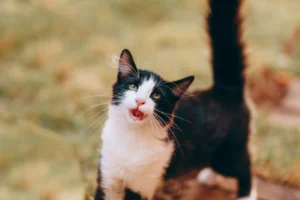

Have you ever caught your feline friend flicking their tail and wondered if they’re annoyed or just excited? At All Animals Veterinary Hospital, our Dawsonville, GA veterinarians are pretty adept at decoding kitty communication. Cats often use their tails like a built-in communication tool. While Fluffy may not speak human words, her tail reveals a great deal about her mood, intentions, and comfort level.
Learning to read your cat’s tail language can help you better understand your kitty’s needs and avoid purrsonality. In this blog, we’ll explore the different positions, movements, and contexts of feline body language signs and what they mean for your bond with your feline pal.
Why Cat Tail Language Matters
Cats rely heavily on non-verbal communication. Their tails, ears, eyes, and posture combine to send signals to both humans and other animals. Unlike dogs, who often greet with wagging tails, cats use subtler movements that reflect complex emotions.
By paying attention to tail cues, you’ll:
- Anticipate Fluffy’s reactions before they escalate.
- Avoid stress or conflict during play or handling.
- Strengthen your bond with your feline companion.
Understanding why cats flick tails or hold them in certain positions gives you insight into what they’re saying without words.
Common Cat Tail Positions And What They Mean
Tail Held High
A tail standing tall and straight usually signals confidence and happiness. Cats often approach trusted humans with their tails up, sometimes with a little curve at the tip. Think of this as their way of waving hello.
Tail Curled Around The Body
When your kitty wraps their tail around themselves while sitting or lying down, it often shows relaxation. In some cases, it can also mean your cat feels cautious but safe enough to rest.
Tail Tucked Low
A tail tucked tightly under the body usually signals fear, anxiety, or submission. This is common during stressful events like vet visits or when new pets are introduced.
Tail Wrapped Around You
If Fluffy curls her tail around your leg or arm, it’s often a sign of affection and trust. Think of it as sort of like a feline hug.
Decoding Cat Tail Movements
Slow Swishing
A tail moving gently back and forth often shows focus. Cats do this when they’re watching birds, stalking toys, or preparing to pounce.
Rapid Flicking
When cats flick their tails quickly, it can be a warning. Fluffy may be overstimulated, annoyed, or deciding whether to bolt. A light flick at the end of the tail may just mean your pet is engaged.
Quivering Tail
A tail quivering in the air while upright usually means excitement. Cats may do this when greeting you or marking territory.
Thrashing Tail
If your kitty’s tail is thumping against the ground, it often means agitation. Give them space until they calm down.
Click here for our blog on kitty meows.
Tail Language In Context
Tail cues make the most sense when you consider the rest of the body:
- Ears forward + tail up: Friendly and curious.
- Ears back + tail lashing: Agitated or defensive.
- Dilated pupils + twitching tail: Overstimulated or in hunting mode.
Reading the whole picture prevents misinterpretation.
Why Cats Flick Tails During Petting
Many cat owners notice their feline companion flicking their tails during petting. This can mean:
- They’re enjoying the contact but nearing their limit.
- They’re conflicted — they like attention but need a break.
- They’re giving a polite signal before escalating to claws or teeth.
By watching for this, you can avoid overstimulating your kitty.
Fun Facts About Cat Tails
- Cats have 19–23 vertebrae in their tails, giving them incredible flexibility.
- The tail is vital for balance, especially during jumps or sharp turns.
- Kittens often mimic their mother’s tail language before developing their own signals.
Click here for our blog on basic cat care.
Keeping Cat Tails Healthy
Tail injuries or pain can change how cats communicate. Look out for:
- Hair loss or sores on the tail.
- Reluctance to move or lift the tail.
- Sensitivity when touched.
If you notice changes, bring your cat to our Dawsonville, GA cat vet for a checkup.
Read more: There’s a helpful article about Fluffy’s body language on the PetMD website here. You can find more cat care tips at the ASPCA website here.
FAQ About Cat Tail Language
Why Does My Cat’s Tail Quiver When They See Me?
It usually means excitement and affection — like a feline smile.
Why Do Cats Flick Their Tails At Night?
They may be alert, focused, or engaging in playful hunting behavior.
Is A Wagging Cat Tail The Same As A Dog’s Wag?
No. A dog’s wag often means happiness. A cat’s wag can mean agitation or focus.
Can Tail Position Show Illness?
Yes. A drooping tail or reluctance to move it may signal pain or injury.
Do All Cats Communicate The Same Way?
Not exactly. While the basics are consistent, each cat develops their own quirks.
Visit Our Dawsonville, GA Cat Vet
Want to better understand your feline companion’s moods? At All Animals Veterinary Hospital, our Dawsonville, GA veterinarians help families learn the subtleties of cat tail language and other feline body language signs. If you’ve been searching for a vet near me to explain why cats flick tails or behave in puzzling ways, our veterinary clinic is here to guide you. Call today to schedule your cat’s next appointment.
Click here to visit our Service page and learn more about our pet clinic and the animals we treat.
This blog is for informational purposes only. Always consult your veterinarian for professional guidance tailored to your cat’s health and behavior.