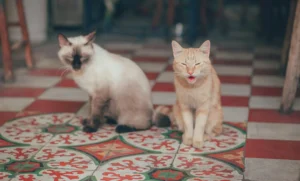

Have you ever been walking through the house when Fluffy suddenly leaps from behind the couch and lands squarely on your feet? At All Animals Veterinary Hospital, our Dawsonville, GA veterinarians have plenty of experience with kitties’ cute quirks. Pouncing is a natural feline behavior. From kittenhood through adulthood, your feline companion relies on pouncing to play, hunt, and communicate.
Understanding cat pouncing behavior helps you distinguish between normal play and unusual behavior that could indicate something is going on. It also gives you insight into how your feline overlord sees the world. In this blog, we’ll explore why cats pounce, how playful feline behavior benefits your kitty, and when to call your Dawsonville, GA cat vet for guidance.
Why Cats Pounce: Instincts At Work
Cats are natural hunters, even if they live indoors and never chase anything more threatening than a toy mouse. Pouncing is a crucial survival skill in the wild, allowing cats to stalk prey silently and strike with precision.
For your feline friend at home, pouncing remains a built-in instinct. It satisfies their need to:
- Practice hunting skills by chasing toys or imaginary prey
- Build coordination and strength through jumping and leaping
- Communicate energy or excitement with you or other pets
- Relieve stress and boredom by channeling natural instincts
Whether you see it as silly play or surprise attacks, cat pouncing is almost a given, especially with young kitties. This behavior is a key part of your kitty’s daily routine!
Playful Feline Behavior And Development
Kittens start practicing pouncing almost as soon as they can walk. By three weeks old, they’re already learning how to crouch, wiggle, and spring. This early play builds coordination, balance, and confidence. (It’s also adorable to watch.)
As cats grow, pouncing continues to serve as a form of enrichment. Indoor cats in particular rely on these bursts of activity to stay fit and engaged. Without opportunities to pounce, climb, and play, your feline companion may develop boredom or behavioral issues.
That’s why your Dawsonville, GA cat vet will often recommend regular play sessions as part of overall feline health care.
The Social Side Of Cat Pouncing
Cats don’t only pounce on toys. They sometimes pounce on you, other pets, or even household objects. Each situation can mean something different:
- Pouncing on humans: Usually playful, though it may also signal attention-seeking or hunger.
- Pouncing on other cats or pets: Often an invitation to play, but it can sometimes escalate if the other pet isn’t interested.
- Pouncing on objects: A sign your feline pal is bored or creatively inventing new prey.
Observing the context and body language helps you interpret what your kitty is trying to communicate.
Cats need enrichment, just like people do. Click here for our link on kitty boredom.
When Cat Pouncing Becomes A Problem
Most pouncing is harmless fun, but there are times when it may need management. Contact your veterinarian if:
- Pouncing turns aggressive, with biting or scratching that causes injury.
- Your cat seems restless or hyperactive all the time.
- Pouncing is directed toward dangerous objects, like cords or appliances.
- An older cat suddenly develops new or excessive pouncing behavior.
Sometimes behavioral issues are linked to medical conditions like hyperthyroidism or anxiety. A Dawsonville, GA cat vet can rule out health problems and suggest ways to redirect energy safely.
How To Encourage Appropriate Pouncing
Supporting natural cat pouncing behavior is good for your feline friend’s health and happiness. You can channel their instincts with safe, enriching activities:
- Interactive toys: Wand toys, feather teasers, or moving toys mimic prey and give your kitty a safe target.
- Playtime schedules: Cats thrive on routine. Try two 10–15 minute play sessions daily.
- Environmental enrichment: Cat trees, tunnels, and scratching posts encourage climbing and leaping.
- Treat puzzles: Hunting for food satisfies the predator drive while preventing overeating.
By giving your feline pal safe ways to pounce, you protect both them and your household furniture. However, you don’t want to let your kitty bite or scratch you: that’s bad petiquette!
Read more: PetMD did an article about playing with Fluffy, which you can read here. The SPCA of Texas has an article on choosing Fluffy’s toys, which you can read here.
Fun Facts About Cat Pouncing
- Cats can leap up to six times their body length in a single bound.
- Some researchers believe pouncing also plays a role in feline social bonding.
- Domestic cats often exaggerate their pouncing motions compared to wild cats, adding extra drama for fun.
These facts remind us that what may look like chaos is actually a finely tuned skill at work.
Frequently Asked Questions About Cat Pouncing
Why Does My Cat Pounce On Me At Night?
Cats are naturally crepuscular, meaning they’re most active at dawn and dusk. Nighttime pouncing often comes from built-up energy.
Is Pouncing A Sign Of Aggression?
Not usually. Playful feline behavior may look rough, but true aggression is often accompanied by hissing, growling, or pinning the ears back.
Can I Stop My Cat From Pouncing?
You can’t eliminate the instinct, but you can redirect it with toys, playtime, and enrichment.
Do Older Cats Still Pounce?
Yes, though usually less often. A sudden increase in activity in a senior cat warrants a veterinary exam.
Why Does My Cat Pounce On My Feet?
Moving feet mimic prey. Many cats see wiggling toes as irresistible targets.
Visit Our Dawsonville, GA Cat Vet
Curious about why cats pounce and what it means for your feline companion? At All Animals Veterinary Hospital, our Dawsonville, GA veterinarians can help you understand playful feline behavior and help you keep your feline buddy healthy and happy. If you’ve been searching for a vet near me, our veterinary clinic is here to help. Call today to schedule your cat’s next visit.
Click here to visit our Service page and learn more about our pet clinic and the animals we treat.
This blog is for informational purposes only. Always consult with your veterinarian for professional advice, diagnosis, or treatment for your feline companion.